
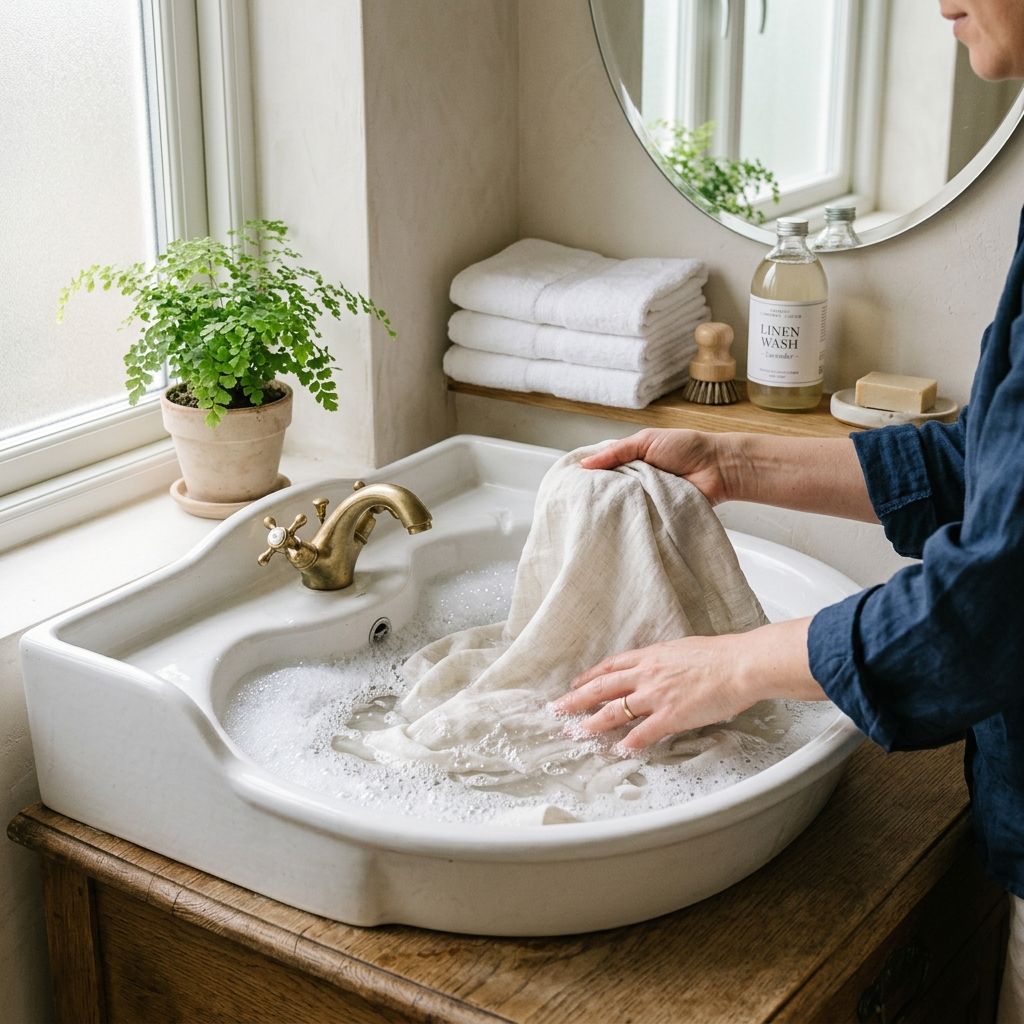
How to Hand Wash Curtains Safely at Home
Hand washing is the absolute gold standard for cleaning semi-delicate curtains. While washing machines offer convenience, their vigorous mechanical action can easily damage fine fibers, stretch seams, or ruin delicate headers. By taking the time to hand wash, you protect your investment, maintaining complete control over water temperature, detergent concentration, and agitation. Here is your step-by-step guide to hand washing your curtains safely at home.
1. Identify Hand-Wash Friendly Fabrics
Hand washing is ideal for a wide variety of curtain fabrics. Lightweight linen, unlined cotton, synthetic lace, fine polyester sheers, and delicate cotton blends respond beautifully to this gentle treatment. These fabrics benefit from a wet clean to dissolve water-soluble dust, grease, and odours, but they lack the structural density to withstand the aggressive spin cycles of a washing machine.
Always read the manufacturer's care label first. If the label specifies "Dry Clean Only," do not attempt to hand wash, as water exposure can cause severe shrinkage or fabric puckering. If the label indicates "Hand Wash," you are ready to proceed with confidence, knowing this method will preserve the fabric's texture and color brilliance.
2. Step 1: Pre-Cleaning Preparation and Shaking
Before submerging your curtains in water, you must prepare them properly to prevent fabric damage. Take the curtain panels down from the rod. Methodically remove all metal drapery pins, plastic hooks, rings, and any heavy lead drapery weights that might be hidden inside the bottom hems. These hard items can snag the delicate fabric or rust during the washing process, leaving permanent orange stains.
Next, take the curtains outdoors and give them a gentle shake to release loose surface dust, cobwebs, and lint. This prevents the washing water from turning muddy instantly, ensuring a cleaner, more efficient wash cycle. If you see thick collections of dust along the top pleats, use a soft-bristled brush or a low-suction vacuum to extract them gently first.
3. Step 2: Spot Staining Treatment Prior to Hand Washing
If your curtains have localized stains, such as food splashes, insect spots, or grimy finger marks along the leading edges, treat these areas before submerging the entire panel. Trying to scrub these spots during the general wash can lead to localized fabric wear, color loss, or thread damage.
Create a gentle spot-treatment solution by mixing a few drops of mild liquid detergent with cool water. Dip a clean, soft microfiber cloth or a soft-bristled toothbrush into the solution. Gently tap and blot the stained area, working from the outside of the spot inward to prevent the stain from spreading. Avoid scrubbing back and forth with force, as this raises the fabric nap and breaks the delicate threads. Once the stain has softened and lifted, the panel is ready for the main wash basin.
4. Step 3: Setting Up the Wash Basin
Due to their large surface area, curtains require plenty of space to wash properly. A clean bathtub, a large laundry utility tub, or a clean plastic storage container is the perfect wash basin. Thoroughly clean the tub first to remove any soap scum, bleach residues, or bath oils that could stain your curtain fabric.
Fill the tub with cool or lukewarm water. Hot water must be avoided, as it is the primary cause of fabric shrinkage and color fading. Mix in a mild, pH-balanced liquid laundry detergent designed for delicates or woolens. Ensure the detergent is completely dissolved in the water before submerging the curtains, as undissolved detergent concentrations can leave faded spots on dyed fabrics.
Gentle Agitation Only
Submerge one curtain panel at a time to ensure it has enough space. Gently press the fabric into the soapy water, allowing it to saturate fully. Use a gentle kneading motion, moving the fabric slowly through the water. Never scrub, rub, or wring the fabric, as this creates friction that breaks delicate fibers and leaves deep, permanent creases.
5. Step 4: The Soaking and Rinsing Process
Allow the curtains to soak in the soapy water for ten to fifteen minutes. This soaking time gives the mild detergent molecules enough opportunity to bond with and lift away grease, dust, and microscopic organic particulates. If you are dealing with stubborn dirt, you can gently squeeze the fabric occasionally during the soak.
Drain the soapy water from the basin. Gently press the curtain panel against the bottom or side of the tub to expel the dirty water. Do not twist or wring the curtains. Refill the tub with clean, cold water, submerge the curtains, and gently move them to rinse out the soap. Repeat this draining and rinsing process at least two to three times, or until the rinse water remains completely clear and free of soap bubbles. Lingering soap residue will attract dust once the curtains are dry, dulling their appearance quickly.
6. Step 5: Handling Fabric Shrinkage and Fiber Relaxation
Natural fabrics like linen and cotton have a natural tendency to experience fiber relaxation when wet, which manifest as minor shrinkage. Hand washing minimizes this risk compared to machine washing, but care is still required. During the rinse phase, avoid stretching or pulling the wet panels excessively, as the water-logged fibers are heavy and weak, making them highly susceptible to warping out of shape.
Keep the fabric supported fully in your hands when transferring it out of the basin. Do not hang wet, dripping curtains on clotheslines by their corners, as this creates localized tension that stretches the edges, leading to uneven hems. Proper, flat support ensures that the fibers return to their original relaxed state as they dry, preserving the dimensions of your panels.
7. Step 6: Extracting Excess Water and Drying Safely
After the final rinse, gently press the curtain panels against the side of the tub to expel as much water as possible. To extract more moisture without wringing, you can lay a clean, dry white bath towel flat on the floor, place the curtain panel on top, and roll the towel up gently. The dry towel will absorb a significant amount of excess water from the fabric.
Rehang the damp curtains on their rods immediately. The natural weight of the damp fabric will help pull out minor wrinkles, allowing them to dry with a smooth, elegant drape. Ensure the windows are open and fresh air is circulating freely. If hanging them outdoors, choose a shady, well-ventilated area. Direct sunlight must be avoided, as intense ultraviolet rays will degrade natural fibers and fade colors rapidly. This attentive, hand-care approach preserves your curtains beautifully for years.